TL;DR
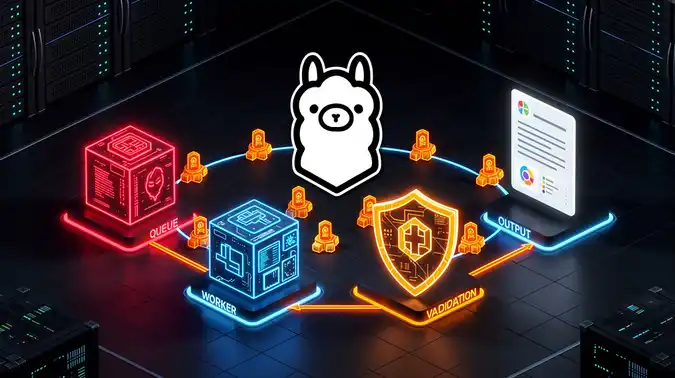
- Opinionated open-source AI generator stack for 2026: Ollama plus n8n plus Redis plus Qdrant plus Langfuse plus Docker Compose.
- Layer-by-layer picks with the runner-up and the reason we chose the primary.
- Full compose file, cost analysis vs cloud equivalents, and 90-day upgrade roadmap.
If you are picking an AI generator stack in 2026, the number of credible open-source options is finally a feature, not a bug. Runtimes, orchestrators, queues, vector databases, observability, deployment: every layer has two or three tools that are actually good. This deep dive is our opinionated pick for each one, plus the runner-up, plus what we would change in 90 days. We run this exact stack in production on singularitybyte.com, so the recommendations are not theoretical.
The focus keyword is AI generator, and the philosophy is consistent across every layer: boring technology, open licensing, local-first defaults, and zero tolerance for tools that only work when you pay for the cloud plan. The best AI generator stack for developers in 2026 is the one that still runs when your credit card expires.
The Philosophy: Boring, Open, Local-First
Before we pick any tools, we commit to three rules. They cut the decision space by about 80% and make every layer easier.
- Boring technology. Tools with a 3-year track record beat tools with a 300-star GitHub trend. The best AI generator stack is the one that is still alive in 2028.
- Open licensing. Apache 2.0, MIT, or AGPL preferred. Source-available or BSL only when there is literally no good alternative.
- Local-first. Every layer must run on a single Linux box without a cloud account. Cloud is optional, not required.
Everything below respects those rules. If a layer cannot meet them in 2026, we say so and explain the trade-off.
Layer 1: LLM Runtime, Ollama vs vLLM vs SGLang
Our pick: Ollama for single-developer and homelab work. Our runner-up: vLLM for any stack serving more than a handful of concurrent users.
Ollama wins on ergonomics. ollama pull qwen2.5:7b followed by curl localhost:11434/api/generate is a full runtime in under two minutes. It auto-manages quantization, model caching, and VRAM. For solo builders and early-stage products, nothing is close.
vLLM wins on throughput. Its PagedAttention implementation gives you 5 to 20 times more tokens per second per GPU than anything else open source. If you are serving a production chat or batch generation workload, vLLM is the answer. The trade-off is operational complexity: you manage the weights, the config, and the GPU yourself.
SGLang is the interesting outsider. It specializes in structured output and RadixAttention for prefix caching, which makes it fast for agent workflows that reuse the same system prompt. Worth trying if your AI generator does thousands of near-identical calls per hour.
Reason for the pick: Ollama is the best AI generator runtime in 2026 for one reason: it is the only one where a new developer can be generating text five minutes after pulling Docker. Graduate to vLLM when metrics force you to, not before.
Layer 2: Orchestration, n8n vs Temporal vs LangGraph
Our pick: n8n for visual workflows and most content-generation pipelines. Our runner-up: LangGraph for stateful agent code. Special mention: Temporal for durable multi-hour runs.
n8n is the closest thing open source has to a universal glue layer. It speaks HTTP, it has 400+ nodes, and it runs in one Docker container. For an AI generator that reads a topic, calls Ollama, polishes with Claude, writes to a CMS, and posts to Slack, n8n is one workflow you can ship in an hour. We wrote the full build in our n8n AI generator tutorial.
LangGraph is what you use when the flow branches and the state is too complex to express visually. Typed state, conditional edges, memory, and human-in-the-loop. If your generator is really an agent, use LangGraph.
Temporal is in a different category. It guarantees exactly-once execution across worker restarts. For an 8-hour agent run or a multi-step job you cannot afford to lose, Temporal is the only credible answer. The operational cost is real: a server, a database, SDK setup. Do not use it until you feel the pain.
Reason for the pick: n8n handles the 80% case (linear pipelines with a couple of branches) with zero code. LangGraph handles the 15% case (real agent logic). Temporal handles the 5% case (you absolutely cannot lose a run).
Layer 3: Job Queue, Redis vs RabbitMQ
Our pick: Redis (with RQ or BullMQ). Our runner-up: RabbitMQ for any multi-team or compliance-heavy deployment.
Redis is already in your stack. You use it for caching, rate limiting, and session storage. Adding RQ for Python or BullMQ for Node on top gives you a job queue for free. It handles retries, scheduling, priorities, and dead-letter queues out of the box.
RabbitMQ is the right call when you need multiple consumers per job, topic routing, or strict delivery guarantees across teams. It is also harder to operate and slower to start from scratch.
Reason for the pick: Redis plus RQ is 90% of the functionality at 10% of the operational weight. When we hit a real case where RabbitMQ's topic routing would help, we add it alongside Redis, not instead of it.
Layer 4: Vector Database, Qdrant vs pgvector
Our pick: Qdrant for any stack where vector search is a primary feature. Our runner-up: pgvector when Postgres is already in the stack and vectors are a secondary concern.
Qdrant is fast, Apache 2.0, written in Rust, and has a tiny memory footprint. Its hybrid search (dense plus sparse) lands in 2026 as the default choice for RAG-powered AI generator pipelines. The REST API is clean, the Python client is pleasant, and the docs are honest about limitations.
pgvector is the right answer when you already run Postgres for your app database. One less service to operate, good-enough performance for under a million vectors, and you get transactions for free. Past a million vectors or when you need advanced filtering, the performance gap with Qdrant becomes real.
Reason for the pick: Qdrant is purpose-built and the defaults are sane. pgvector is the pragmatist's choice when you value operational simplicity over raw speed. Either is a correct answer. What is wrong is picking a closed vector database in 2026.
Layer 5: Observability, Langfuse vs Phoenix
Our pick: Langfuse. Our runner-up: Arize Phoenix for ML-team-heavy deployments.
An AI generator stack without traces is a black box. Langfuse self-hosts in one docker compose up, has clean SDKs for Python and TypeScript, and shows every prompt, every retry, every token count in a searchable UI. You wire it in once and then you can actually answer the question "why did that run cost $0.70 instead of $0.02?"
Phoenix (from Arize) goes deeper on evaluation and drift metrics. It is the better pick for teams that need to compare prompt versions, run evals, and track quality regressions over time. For solo builders, Langfuse is simpler and faster to deploy.
Reason for the pick: Langfuse is the most boring observability tool for an AI generator in 2026, and that is exactly what you want. You install it, you forget it is there, and when something breaks you have the data.
Layer 6: Deployment, Docker Compose vs Kubernetes vs Coolify
Our pick: Docker Compose for single-host. Our runner-up: Coolify for self-hosted PaaS. Special mention: K3s for multi-host.
For anything that fits on one beefy box (which in 2026 is most indie AI generator stacks), Docker Compose is the right answer. You write one YAML file, you version it in git, you deploy with docker compose up -d. Nothing fancier earns its weight until you genuinely outgrow one machine.
Coolify wraps Docker Compose in a Heroku-style UI. Push to git, Coolify builds and deploys. For teams that do not want to SSH, it is the gentlest path from laptop to server.
K3s is the right call when one machine is genuinely not enough. Keep the stack on Compose until a specific workload (typically vLLM on a separate GPU box) forces multi-host.
Reason for the pick: full Kubernetes is the wrong first choice for an AI generator in 2026. Start with Compose, graduate to K3s when metrics force you to. Anything else is cargo-culting.
The Full Stack as One Docker Compose
Here is the whole pick as a single file you can drop on an Ubuntu box. This is what runs behind a real production AI generator:
services:
  ollama:
    image: ollama/ollama:latest
    restart: unless-stopped
    volumes:
      - ollama_data:/root/.ollama
    ports:
      - "11434:11434"

  redis:
    image: redis:7-alpine
    restart: unless-stopped
    volumes:
      - redis_data:/data
    command: redis-server --save 60 1 --appendonly yes

  qdrant:
    image: qdrant/qdrant:latest
    restart: unless-stopped
    volumes:
      - qdrant_data:/qdrant/storage
    ports:
      - "6333:6333"

  postgres:
    image: postgres:16-alpine
    restart: unless-stopped
    environment:
      - POSTGRES_PASSWORD=change-me
      - POSTGRES_DB=n8n
    volumes:
      - postgres_data:/var/lib/postgresql/data

  n8n:
    image: docker.n8n.io/n8nio/n8n:latest
    restart: unless-stopped
    depends_on:
      - postgres
      - ollama
      - redis
    environment:
      - DB_TYPE=postgresdb
      - DB_POSTGRESDB_HOST=postgres
      - DB_POSTGRESDB_DATABASE=n8n
      - DB_POSTGRESDB_USER=postgres
      - DB_POSTGRESDB_PASSWORD=change-me
      - N8N_ENCRYPTION_KEY=change-me
      - WEBHOOK_URL=https://generator.example.com/
    ports:
      - "5678:5678"
    volumes:
      - n8n_data:/home/node/.n8n

  langfuse:
    image: langfuse/langfuse:latest
    restart: unless-stopped
    depends_on:
      - postgres
    environment:
      - DATABASE_URL=postgresql://postgres:change-me@postgres:5432/langfuse
      - NEXTAUTH_SECRET=change-me
      - SALT=change-me
      - NEXTAUTH_URL=https://trace.example.com
    ports:
      - "3000:3000"

volumes:
  ollama_data:
  redis_data:
  qdrant_data:
  postgres_data:
  n8n_data:
This is six services, one compose file, one encryption key per service. It is all open source, all Docker-native, and all runnable on a single 16 GB box. For production, put Caddy or Traefik in front and terminate TLS there. Note: the Langfuse image here is a placeholder; the real self-host pulls the multi-container setup from the Langfuse repo, which is a separate docker compose up in the cloned directory.
Cost Analysis: What This AI Generator Stack Actually Costs
Three realistic deployment tiers, with honest numbers:
| Tier | Hardware | Monthly cost | Output capacity |
|---|
| Homelab | Intel N100 mini PC, 16 GB RAM, 500 GB SSD | ~$5 electricity | 100-300 articles/month on Ollama alone |
| Solo VPS | Hetzner CX42 (8 vCPU, 16 GB RAM) | ~$22/mo | 500-1,000 articles/month with Claude polish |
| Small team | Hetzner AX42 (Ryzen 7, 64 GB RAM, 1 TB NVMe) | ~$60/mo | 5,000+ articles/month, room for Qwen 32B |
Add roughly $0.01 to $0.04 per article in Anthropic Claude API spend if you use Sonnet 4.6 for the polish pass. Source: Anthropic pricing page. No token-based SaaS generator comes close to this cost floor.
What We Would Change in 90 Days
Opinions expire. Here is what we would re-evaluate on a three-month cadence:
- Runtime. If SGLang's structured output story keeps improving, we will test it head-to-head with vLLM for the agent workload. For solo work, Ollama stays.
- Orchestration. LangGraph is moving fast. If the visual-editor story improves by Q3 2026, it could eat n8n's lunch for code-first developers. We are watching.
- Observability. Langfuse has a strong evals story now. If Phoenix catches up on self-host ergonomics, the tie-breaker flips.
- Vector DB. Qdrant is comfortable at the top. The interesting fight is between pgvector and Lucene-based vector search for hybrid retrieval.
A Prediction for the Second Half of 2026
The best AI generator stack in late 2026 will look almost identical to this list, with one change: the orchestration layer will consolidate. Either n8n absorbs enough LLM-native features to kill the standalone agent frameworks, or LangGraph ships a visual editor good enough to eat n8n's share for code-first builders. Either way, the two-tool split we use today will not survive the year.
The runtimes, queues, vector DBs, and observability tools are already stable. The data layer is already open source. The only real churn left in the AI content generator space is the glue. Pick a boring stack today, lock it in, and you will be shipping while everyone else is still arguing about LangGraph versus CrewAI versus Pydantic AI.
Sources and Further Reading
Want to try it today? Save the compose file above as docker-compose.yml, run docker compose up -d, open n8n at http://localhost:5678, and you have the full open source AI generator stack running in under ten minutes.